
 Hennessy
- 75CL

 Offers
 |
Special Offers
|
New arrivals
|
Best Sellers
|
|
Cognac
|
Whisky
|
Rum
Armagnac
Gin
|
 Private cellar
 0
0

Bollinger R.D. means Recently Disgorged because this cuvée is marketed a few months after its disgorgement and this despite years of aging. It is a blend of 70% Pinot Noir and 30% Chardonnay from 14 terroirs, including 91% Grands Crus and 9% Premiers Crus.
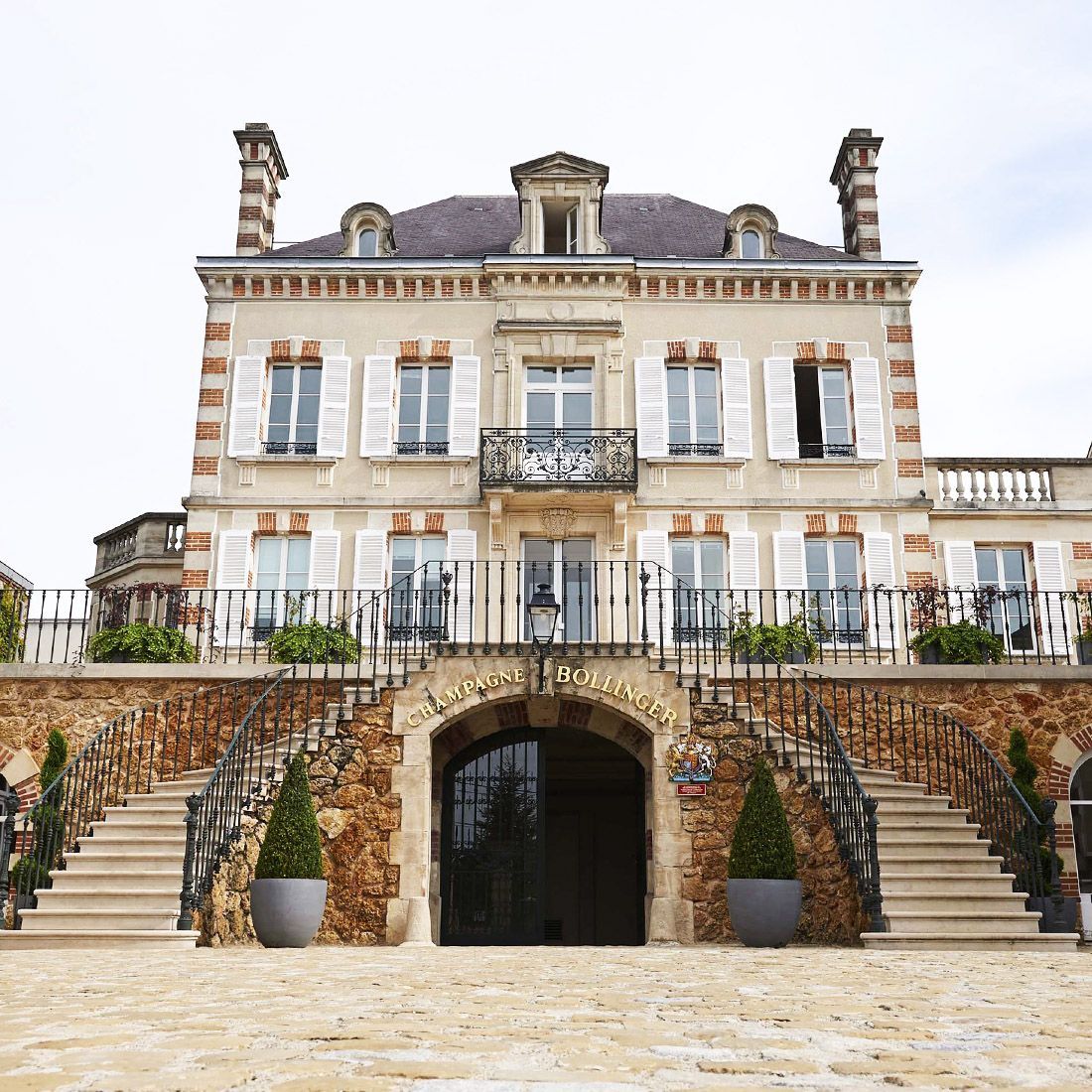
Founded in 1829 by Hennequin de Villermont, Paul Renaudin, and Jacques Bollinger, the house of Bollinger is one of the most prestigious Champagne producers. Located in Aÿ, in the heart of the Champagne region, Bollinger is synonymous with quality, tradition, and excellence. Since its inception, this family-run house has distinguished itself through its unique style and unwavering commitment to crafting exceptional champagnes. Bollinger's philosophy is rooted in a continuous pursuit of excellence and perfection. The house prides itself on mastering every aspect of production, from the vineyard to the bottle. Bollinger is one of the few Champagne houses that owns its own vineyards, covering more than 170 hectares, primarily classified as Grand Cru and Premier Cru. Bollinger champagnes are renowned for their complexity, depth, and structure. The house favors the use of Pinot Noir, which constitutes over 60% of its vineyards, to impart power and character to its cuvées.

Palmer Blanc de Blancs is a champagne of exceptional purity, made mainly from Chardonnays from the magnificent terroirs of Villers-Marmery and Trépail. These Premiers Crus from the Montagne de Reims, recognized for their elegance and freshness, are harmoniously blended with delicately fruity Chardonnays from the Côte de Sézanne.
This crystalline...

As the very first Zero Dosage cuvée from Maison Gosset, this Champagne showcases the purest expression of the house style from the oldest wine producer in Champagne (Aÿ 1584). Crafted from 62% Chardonnay and 38% Pinot Noir, it features grapes from renowned villages such as Ambonnay, Avize, Bouzy, Cumières, Cramant, Villers-Marmery and Rilly-la-Montagne. With zero added...

Agrapart Venus is a Cuvée from a single plot of Chardonnay of 0.60 hectare (Fosse aux porceaux) planted in 1959. This plot located mid-slope is worked only by man and horse in order to reveal another aspect of Avize terroir.

Pierre Péters Grande Réserve is a blend of four parcels of the finest Côte des Blancs wines from the Domaine (Le Mesnil, Avize, Cramant, Oger), to which is added around 20% of the best Reserve Perpetual vats.

Larmandier-Bernier Vieille Vigne du Levant comes from an exceptional plot in a place called “Bourron du Levant” facing south-east. The vines are between 56 and over 80 years old. The deep roots and the diversity of the old vines contribute to the complexity of the wine. They are, like all the vineyards, cultivated naturally to obtain the perfect maturity.

Vilmart Les Blanches Voies 2011 is a blend of 100% Premier Cru Chardonnay from sixty-year-old vines (Les Blanches Voies plot). Aging ten months in oak barrels of 228 liters. Quantity limited to 2900 numbered bottles.

Amazone de Palmer is a unique champagne, made exclusively from the best terroirs of the Montagne de Reims. It benefits from slow aging on lees and manual riddling, which makes it an exceptional champagne.
The assembly is carried out with great know-how. The cellar manager selects wines from 3 remarkable years based on their expression, and...

PN AYC18 is the 4th edition of a new range created by Maison Bollinger to honor the Pinot Noir grape. This Champagne is made 100% with Pinot Noir coming mainly from the village of Ay (AYC) on the basis of the 2018 harvest. The blend is completed by reserve wines dating back to 2009

Association with the press of 2 adjoining plots located in the heart of the Pierry terroir: Les Tartières and Les Porgeons planted in 1990 and 1985. Pure expression of the complexity, between flesh and tension, of Chardonnays from Coteaux Sud of Epernay.

Nicolas Maillart Franc de Pied 2019 is a single plot Cuvée (Les Coupes), single grape variety (100% Pinot Noir) and limited to less than 4000 bottles per vintage. The peculiarity of this Champagne is that it is made from "free-root" vines, that is to say without American rootstock as was the Champagne vineyard before the phylloxera crisis.
Bollinger R.D. means Recently Disgorged because this cuvée is marketed a few months after its disgorgement and this despite years of aging. It is a blend of 70% Pinot Noir and 30% Chardonnay from 14 terroirs, including 91% Grands Crus and 9% Premiers Crus.